


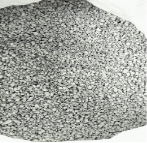
Nano Porous
Nanoporous is an advanced filtration medium specifically designed for effective iron removal from water. It is composed of pumice granules (4-6mm size) and lime, blended and dried to create a porous and chemically active material. Nanoporous features a highly porous structure that provides an extensive surface area for adsorbing impurities, particularly iron. The addition of lime enhances the chemical interaction with dissolved iron, raising the water’s pH and promoting the formation of insoluble iron hydroxides, which are then captured by the pumice's pores. This dual-action mechanism ensures superior filtration, allowing Nanoporous to efficiently trap and remove iron contaminants, resulting in clean and safe water output.
Key Features
- • Porous structure: High surface area for enhanced adsorption.
- • Chemical action: Lime component aids in iron precipitation.
- • Durable: Withstands repeated filtration cycles.
- • Environmentally friendly: Composed of natural materials.
Applications & Uses
- Water treatment plants Nanoporous is ideal for systems requiring efficient and reliable iron filtration, with a sustainable and long-lasting performance.
- Household water filtration systems Efficient and reliable iron filtration for domestic use.
- Industrial iron removal processes Reliable and sustainable long-lasting performance for industrial applications.
Technical Specifications
| Parameter | Details |
|---|---|
| Material Used | Pumice granules (4-6 mm size) mixed with Lime |
| Pumice Properties | Size: 4-6 mm Porous High surface area for adsorption |
| Density of Pumice | 0.6 - 0.9 g/cm³ (lightweight, porous structure) |
| Surface Area of Pumice | 10 - 30 m²/g (dependent on porosity and particle size) |
| Lime Properties | Alkaline substance Increases water pH to facilitate iron precipitation |
| Filtration Capacity | Approx. 1-2 mg of iron removed per gram of pumice-lime mixture (depends on water quality and flow rate) |
| Filtration Mechanism | Adsorption: Pumice adsorbs iron particles due to its porous structure. Chemical Precipitation: Lime raises pH, leading to the formation of insoluble iron hydroxides (Fe(OH)₃). |
| Chemical Reactions | Fe²⁺ + OH⁻ → Fe(OH)₂ (ferrous hydroxide) | Fe³⁺ + OH⁻ → Fe(OH)₃ (ferric hydroxide) |
| Filtration Efficiency | Removes iron in the form of ferric/ferrous hydroxides. The efficiency improves with proper drying and surface contact |
| Filtration Steps | Use the dried mixture as a filtration medium for water with high iron content. |
| Applications | Iron removal from drinking water. Treatment of well or borehole water with high iron content |
| Maintenance | Replace or clean the filter media regularly to ensure optimal performance. |
| Advantages | Cost-effective, Environmentally friendly, Simple to apply |
| Potential Limitations | Requires periodic replacement or regeneration. May not remove other contaminants effectively |
More from Water Purification Media
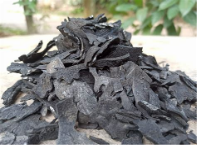
Activated Carbon
Activated carbon is a highly porous material known for its exceptional ability to adsorb impurities, toxins, and odors. Made from natural substances like wood, coal, or coconut shells, it undergoes a special activation process to create a vast surface area, making it ideal for applications such as water purification, air filtration, and medical treatments. Whether it's improving air quality, purifying water, or supporting industrial processes, activated carbon is a versatile solution for cleaning and detoxifying environments.
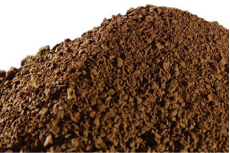
Safi Media, GHFO
Arsenic Removal Media contains iron oxide based selective resin media with high Surface area. It is a nano-particle based selective resin media designed to remove arsenic (arsenate and arsenite) from water. No backwash is required, will work on both Arsenic III and V in a wide range of water conditions.
Eco GAC Cartridge
The Eco GAC Cartridge is a high-performance, eco-friendly Granular Activated Carbon (GAC) filter cartridge designed for point-of-use and commercial water filtration systems.
Eco CTO Cartridge
The Eco CTO Cartridge is a high-performance Chlorine, Taste, and Odor (CTO) carbon block filter cartridge engineered for advanced water purification in residential, commercial, and industrial applications.
Multi Grade Water Filter
The Multi-Grade Water Filter (MGF) is an advanced, deep-bed pressure filtration system designed to remove high concentrations of suspended solids, turbidity, and fine particulate matter from raw water.
Coagulant
Coagulants are specialized chemical formulations engineered to destabilize suspended colloidal particles and dissolved organic matter in water, initiating the primary phase of industrial and municipal water purification.
Flocculent
Flocculants are high-molecular-weight polymeric chemical formulations designed to bridge and agglomerate destabilized micro-particles into large, heavy masses for rapid separation from water.
Reverse Osmosis Plant-RO
The Reverse Osmosis (RO) Plant is an advanced, high-pressure membrane desalination and purification system engineered to produce ultra-pure process water by removing dissolved solids and chemical ions.
Water Treatment Plant-WTP
The Water Treatment Plant (WTP) is an integrated industrial system designed to treat raw surface water or groundwater, rendering it safe, pure, and compliant for municipal consumption or industrial process manufacturing [WTP].
Effluent treatment Plant-ETP
The Effluent Treatment Plant (ETP) is an advanced industrial wastewater treatment system designed to detoxify and purify complex manufacturing discharge so it can be safely recycled or released into the environment.
Acid Treatment Plant- ATP
The Acid Treatment Plant (ATP) is a highly specialized industrial wastewater system engineered to safely manage, neutralize, and treat highly corrosive, low-pH acidic effluents generated during manufacturing processes.
Base treatment Plant-BTP
The Base Treatment Plant (BTP) is a highly specialized industrial wastewater system engineered to safely manage, neutralize, and treat highly caustic, high-pH alkaline effluents generated during industrial manufacturing processes.
Sewage treatment Plant-STP
The Sewage Treatment Plant (STP) is an integrated biological and physical treatment system designed to treat domestic wastewater and sanitary sewage, converting it into safe, clear, and environmentally compliant water.